
Anxious children are helped most by facing their fears gradually, in small steps, with parents who encourage brave behavior and slowly reduce reassurance and avoidance. For general fears and worries, start with Benny Says Goodbye to Worries. For shyness and social anxiety choose Benny Beats His Shyness, for fear of dogs Davey’s Brave Friendship, for calming skills Ruby and the Secrets of Relaxation, and for older children and teens with OCD How I Fought My OCD and Won.
How anxiety works in children
Fears and worries are part of every childhood. Anxiety is the body’s alarm system, and it is useful when there is real danger. In an anxious child the alarm goes off too easily: at the thought of speaking in class, meeting a dog, or something going wrong. The fear is real for the child even when the danger is not.
From a cognitive behavioral therapy (CBT) point of view, anxiety is kept going mainly by avoidance. Staying away from the feared situation brings quick relief, but the child never learns that the feared outcome usually does not happen and that the discomfort can be handled. Parents naturally want to protect their child, so they answer the same worried question many times, speak on the child’s behalf, cross the street, or rearrange family life around the fear. This is called parental accommodation. It comes from love, yet it tends to keep the anxiety in place.
What helps is gradual practice. Child and parents list the feared situations from easiest to hardest and work through them one at a time, staying in each long enough for the fear to settle. Noticing worried thoughts and testing them against what actually happens, calming skills such as slow breathing and muscle relaxation, and praise for brave behavior all support the process. Small, regular steps matter more than big leaps.
Which book fits your child?
Benny Says Goodbye to Worries

This book is about overcoming fears and worries in general. It gives parents a roadmap of simple strategies based on CBT principles, and it gives children a humorous story about how Benny and his parents worked together, one challenge after another. It is a good starting point when a child worries about many different things. See Benny Says Goodbye to Worries. Buy on Amazon.
Benny Beats His Shyness
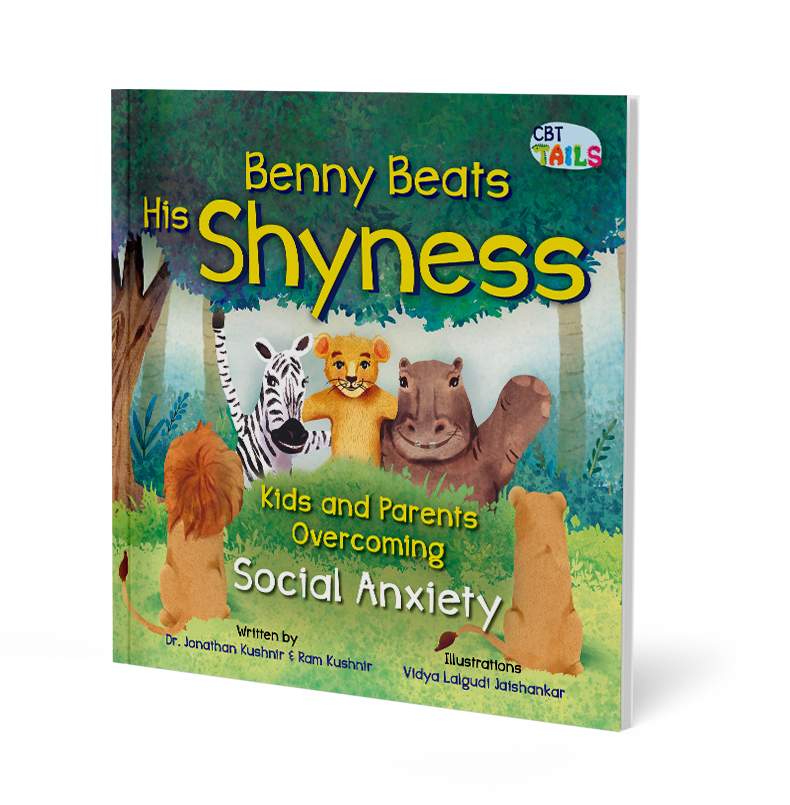
Written for a reading age of 4 to 8, this book follows Benny the lion cub as he overcomes his social anxiety, and it outlines the strategies his parents used to help. By the end Benny communicates easily with cubs and adults and can speak in class. It suits children who find it hard to speak up or join in. See Benny Beats His Shyness. Buy on Amazon.
Davey’s Brave Friendship
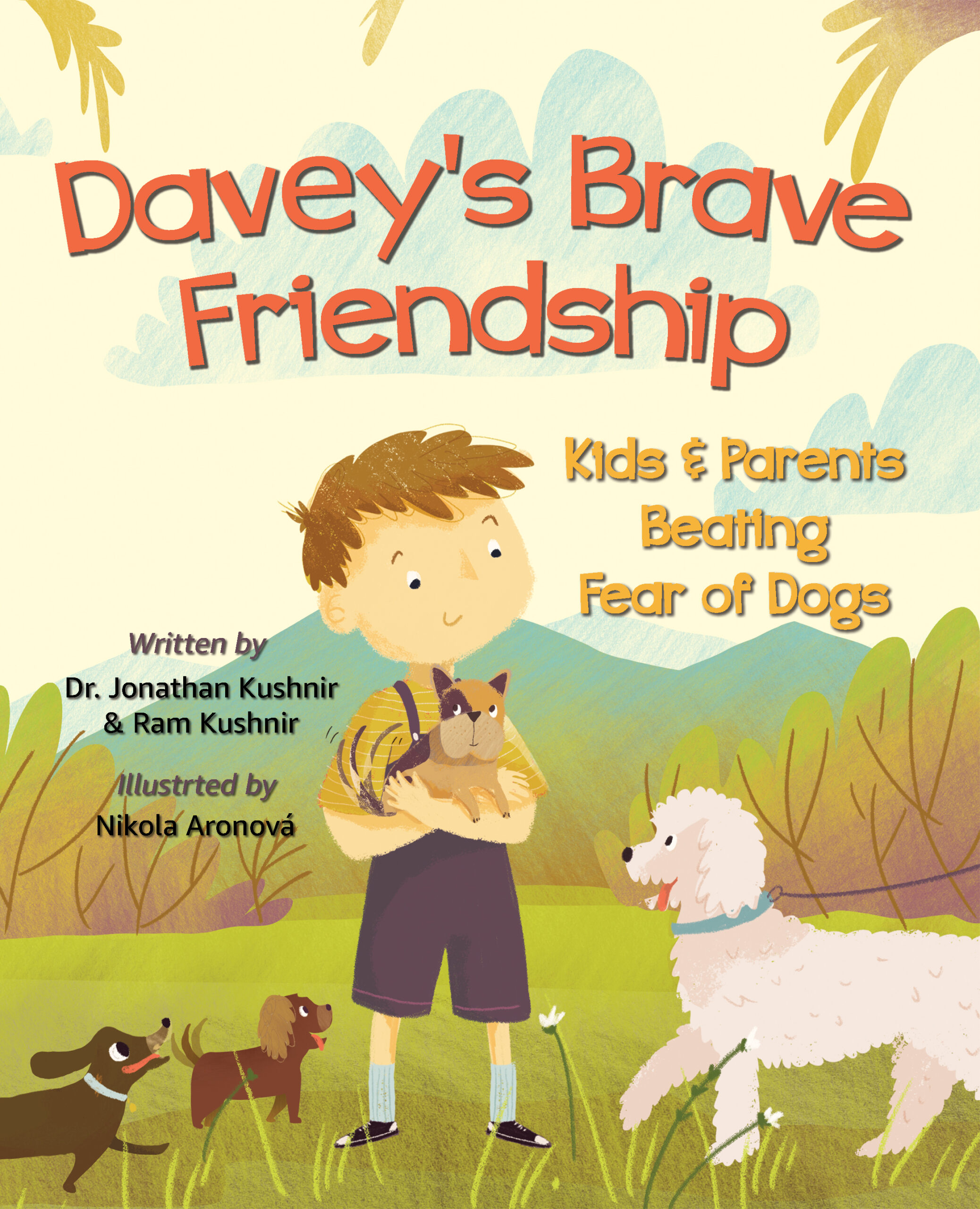
“I’m not going. They have a dog there!” Davey used to avoid places and change his route because of dogs. The story follows him and his parents as he gains confidence and learns to beat his fear of dogs, and it shows parents simple CBT strategies for this specific fear. See Davey’s Brave Friendship. Buy on Amazon.
Ruby and the Secrets of Relaxation
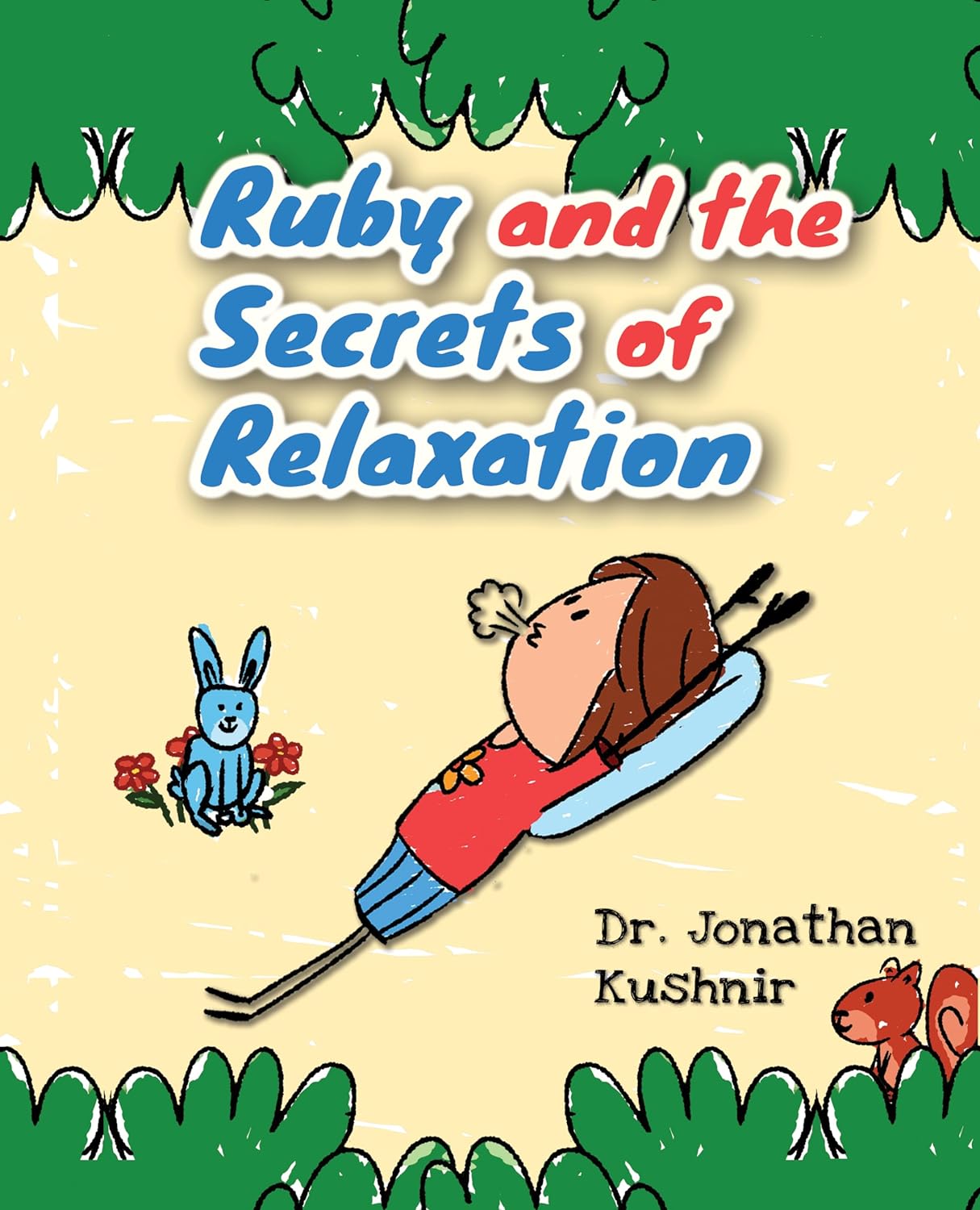
With guidance from her mother, Ruby learns how to relax and calm down when she feels anxious. The book, for a reading age of 3 to 7, aims to help children reduce tension and handle stress and anxiety. Relaxation is a useful supporting skill, so it pairs well with any of the other books. See Ruby and the Secrets of Relaxation. Buy on Amazon.
How I Fought My OCD and Won
This short book, for a reading age of 12 to 18, is a fictional account of Ben, from the time his OCD first emerges through a course of CBT with the support of his parents, friends, and therapist. It explains obsessive thoughts and compulsive acts and their effect on a family. It is written to be relatable to young people with OCD, and adult readers can benefit too. See How I Fought My OCD and Won. Buy on Amazon.
How to use a book like this
- Match the book to the main fear. Work on one difficulty at a time instead of several at once.
- Read together at a calm time. Let your child comment on the character’s fears before you ask about their own.
- Turn the story into small steps. List situations from easiest to hardest and begin with one your child feels ready to try.
- Ease off reassurance gradually. Answer a worried question once, then encourage your child to rely on what they have practiced, and praise every brave attempt.
- Give teens some space. An older child may prefer to read the OCD book alone and talk about it afterwards.
When to seek professional help
Consult your pediatrician or a child psychologist if anxiety keeps your child from school, sleep, or friendships, causes lasting distress, or has not improved after several weeks of consistent practice. OCD in particular usually calls for assessment and treatment by a professional trained in CBT. Dr. Kushnir’s books are educational and are not a replacement for professional assessment or treatment.
Read more about Dr. Kushnir and his online clinics.
Frequently asked questions
How can I tell if my child's anxiety is more than normal worry?
All children have fears and worries. Anxiety deserves more attention when it is intense, lasts for weeks, and gets in the way of school, sleep, friendships, or family life. If you are unsure, a pediatrician or child psychologist can help you judge.
What should I say to an anxious child?
Acknowledge the feeling and show confidence at the same time, for example: I can see this is scary, and I know you can handle it. Avoid long reassurance or promises that nothing will go wrong. Encourage one small brave step and praise the effort.
Is shyness the same as social anxiety?
Not exactly. Many children are shy or slow to warm up and still take part in daily life. Social anxiety is a stronger fear of being judged or embarrassed that leads a child to avoid speaking, joining in, or going to social situations.
Can books help a child with anxiety?
Stories can help children understand their fears, feel less alone, and become willing to try coping strategies, and they give parents a shared language to use. Books are educational tools and work best with regular practice. They are not a replacement for professional care when anxiety is severe.
More guides for parents
- Books for Children With Nighttime Fears: A Parent's Guide
- Books About Nightmares and Dreams for Kids
- Books for Children With Separation Anxiety
- Anger Management Books for Kids and Parents
- Books About Sleep for Kids: Bedtime and Why We Sleep
By Dr. Jonathan Kushnir, clinical psychologist. This guide is educational and does not replace professional advice.

0 Comments