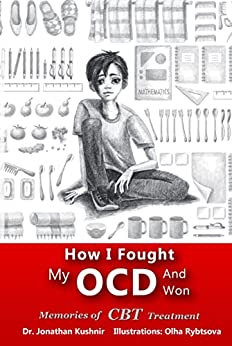
How I Fought My OCD – and Won: Memories of CBT Treatment
Book description
This book describes the journey of one kid, Ben, from when his OCD first emerges to how, with the help of Cognitive Behavioral Therapy, he gets back to his normal, happy, healthy life.
Obsessive-Compulsive Disorder is very common in childhood and very challenging for both child and family, with a significant negative impact on the child’s functioning and well being.
Obsessive-Compulsive Disorder generally includes two components, and Ben experiences both. The first are obsessive thoughts, which are repeated unwanted thoughts that cause significant distress. These can come in many forms and on many subjects. Sometimes, rather than thoughts, there are urges to do certain things. The other component of OCD is compulsive acts, which Ben performs in an attempt to get rid of the thoughts or urges and reduce their distress.
Through Ben’s story, you will learn how OCD manifests and its impact on both a patient and his family. You will also see how a course of treatment helps him to challenge his OCD in a brave fight, along with the support of his parents, friends, and therapist. This short book is written to be relatable to young people with OCD, but adult readers can also benefit, as the manifestation of OCD and the course of CBT treatment are similar in many aspects for adults and kids alike. Ben’s story is an engaging fictional depiction of one course treatment can take.
Recommendation
Who is this book for?
- Your child or teen is troubled by repeated, unwanted thoughts they cannot shake
- You notice rituals, such as repeated checking, washing, or asking for reassurance, that take up more and more time
- Your teen has OCD and wants to know what CBT treatment can look like
- You are a parent or other adult who wants to understand how OCD affects a young person and the family
What’s inside
- The fictional story of Ben, from the time his OCD first emerges to his return to a normal, happy life with the help of CBT
- A plain explanation of the two parts of OCD: obsessive thoughts or urges, and the compulsive acts meant to relieve the distress
- A look at how OCD affects both the young person and the family
- A picture of one course that treatment can take, with support from parents, friends, and a therapist
- A short book of 86 pages, written to be relatable to young people and also useful for adult readers
How to use this book
Teens can read this short book on their own, at their own pace. Parents may want to read it too, so you share the same picture of OCD and of treatment. Afterward, talk about which parts of Ben's story felt familiar. If your teen is starting or considering CBT, the book can help them know what to expect.
Book details
- Author: Dr. Jonathan Kushnir
- Reading age: 12–18 years
- Pages: 86
- Published: November 2022
- Language: English
Frequently asked questions
What age is How I Fought My OCD and Won for?
The stated reading age is 12 to 18. It is written to be relatable to young people with OCD, and adult readers, including parents, can benefit as well.
What are the signs of OCD in children and teens?
OCD generally has two parts. Obsessions are repeated, unwanted thoughts or urges that cause significant distress, and compulsions are acts the person performs to try to get rid of those thoughts and reduce the distress. Only a qualified professional can make a diagnosis.
Can OCD in children and teens be treated?
Yes. Cognitive Behavioral Therapy is a well-established treatment for OCD in young people, and many improve with it. It usually involves gradually facing the feared thoughts or situations while resisting the compulsion, guided by a trained therapist. This book shows a fictional example of that process and is not a substitute for treatment.
When a book is not enough
OCD usually calls for professional treatment, and a book alone is not enough. If obsessive thoughts or rituals take up significant time, cause distress, or interfere with school, friendships, or family life, consult a mental health professional experienced in CBT for OCD. Read more about Dr. Kushnir and his online clinics.
Related guide: Books for anxious children