
Nighttime fears usually ease when a child practices falling asleep independently in small, gradual steps, supported by a calm bedtime routine and steady encouragement from parents. Benny Goes to Bed by Himself and Naomi, the Nighttime Hero are picture books that show this process as a story children can follow, with CBT-based strategies for parents. Parents who want a fuller explanation of the problem and the plan can start with the parents’ guide, Children and Parents Beating Nighttime Fears.
Why nighttime fears happen and what keeps them going
Fear of the dark, of monsters, of strange noises, or of being alone at night is very common in young children and is a normal part of growing up. A child’s imagination develops quickly, and bedtime is the one moment of the day when they are alone, in the dark, with nothing to distract them. For many children these fears come and go without much trouble.
From a cognitive behavioral therapy (CBT) point of view, a fear turns into a lasting problem mainly through avoidance. When a frightened child sleeps in the parents’ bed, has a parent stay in the room until they are asleep, or asks for the room to be checked again and again, everyone feels relief in the moment. The cost is that the child never gets the chance to discover that they can cope alone and that nothing bad happens. Psychologists call these loving, well-meant responses parental accommodation. They are completely understandable, but over time they tend to make the fear stronger and bedtime longer.
What helps is the opposite of avoidance, done gently. Parents and child agree on a plan and move toward independent sleep in small steps, for example a parent sitting a little farther from the bed every few nights, or check-ins that become shorter and less frequent. A predictable, calm bedtime routine, simple coping tools for the child, praise for every brave step, and regular practice all support the process. Progress is rarely a straight line, and a difficult night does not mean the plan has failed.
Which book fits your child?
Benny Goes to Bed by Himself
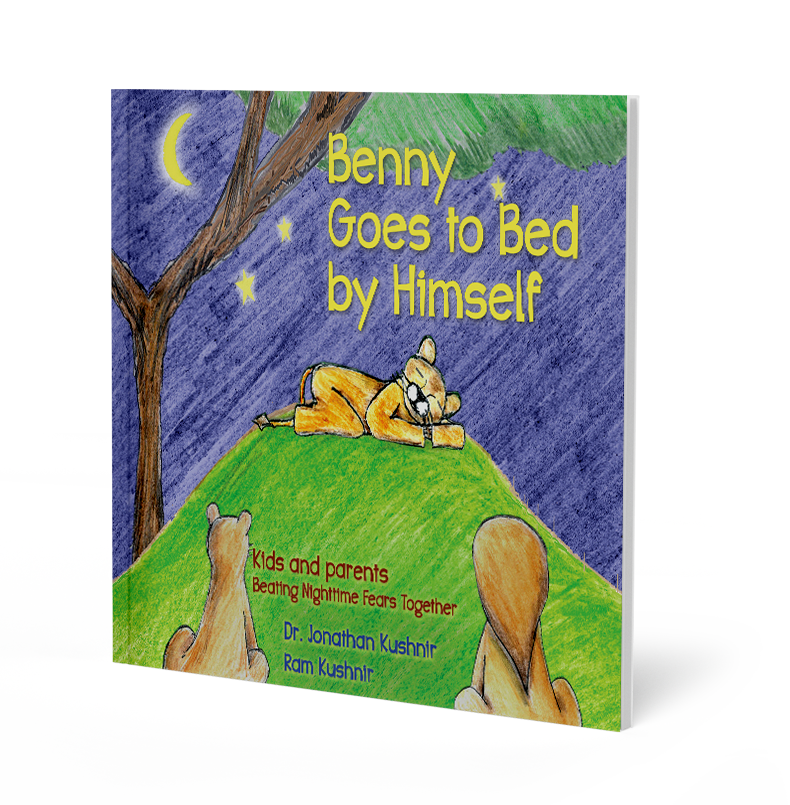
This picture book tells the story of Benny and his family and how they worked together to get rid of Benny’s nighttime fears. The journey is not easy, and they meet one challenge after another before they succeed. By the end, Benny and his parents sleep much better, and Benny even teaches other cubs how to overcome their own nighttime fears. It suits children who are afraid at bedtime and families who want to work on the problem together. See Benny Goes to Bed by Himself. Buy on Amazon.
Naomi, the Nighttime Hero
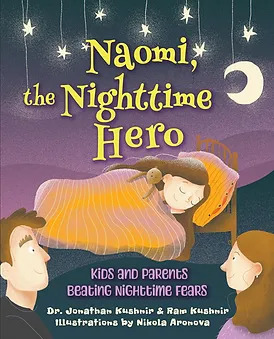
“Can I sleep in your bed tonight?” “Can you stay with me until I fall asleep?” “Can you check for monsters under my bed?” If these requests sound familiar, Naomi’s story may be a good match. The book follows Naomi and her parents as they learn how to beat nighttime fears and Naomi learns to fall asleep independently. It is told with humor, and it shows parents simple CBT strategies for dealing with nighttime fears. See Naomi, the Nighttime Hero. Buy on Amazon.
Children and Parents Beating Nighttime Fears
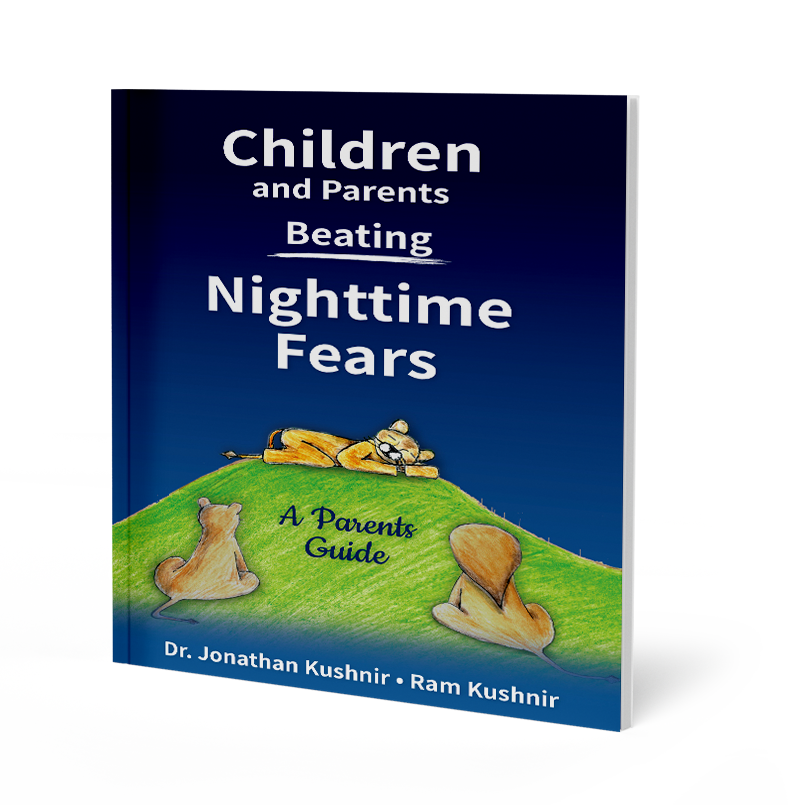
This is a guide for parents, not a storybook. It is written for families whose child has significant nighttime fears and difficulties sleeping. It talks about children’s fears in general and nighttime fears in particular, covers the parents’ side of the problem, and explains how to build an effective coping strategy. It can be read on its own or alongside one of the picture books. See Children and Parents Beating Nighttime Fears. Buy on Amazon.
Benny se va a la cama solo

Spanish-speaking families can read Benny’s story in Spanish. This edition has a stated reading age of 4 to 8 and includes explanations for parents throughout the book, describing the therapeutic principles used in the story. See Benny se va a la cama solo. Buy on Amazon.
How to use a book like this
- Read it in the daytime first. A relaxed afternoon is a better moment to meet the story than a tense bedtime.
- Read the parts for parents yourself. Knowing the plan before you start makes it easier to stay calm and consistent.
- Talk about the character. Asking what Benny or Naomi was afraid of, and what they tried, lets your child talk about fear at a safe distance.
- Choose one small step. Agree on a first goal your child feels ready for, practice it every night, and praise the effort, not only the result.
- Expect ups and downs. Return to the story after a hard night and remind your child how the character kept going.
When to seek professional help
Consider speaking with your pediatrician or a child psychologist if the fears are intense, continue for many weeks despite consistent practice, seriously disrupt your child’s sleep or daytime mood, or began after a frightening event. A professional can assess what is going on and tailor a plan to your child. Dr. Kushnir’s books are educational and are not a replacement for professional assessment or treatment.
Dr. Kushnir also works with families online: help with children’s nighttime fears.
Frequently asked questions
Is it normal for a child to be afraid of the dark?
Yes. Fear of the dark, of monsters, or of being alone at night is very common in young children and is a normal part of development. It deserves more attention when it is intense, lasts a long time, or regularly disrupts the child's or the family's sleep.
How can I help my child fall asleep alone?
Agree on a plan with your child and move toward independent sleep in small steps, such as sitting a little farther from the bed every few nights. Keep the bedtime routine calm and predictable, and praise each brave step. Consistent practice over time matters more than fast progress.
Should I let my scared child sleep in my bed?
An occasional night in the parents' bed, for example during illness, is not harmful. When it becomes the regular answer to fear, the child misses the chance to learn that they can cope in their own bed, and the fear tends to continue. A gradual plan back to independent sleep usually works better than a sudden change.
Does a night light help with fear of the dark?
A dim night light is fine and can make the bedroom feel more comfortable. It does not solve nighttime fears by itself, so it works best alongside a calm routine and gradual practice at falling asleep independently.
More guides for parents
- Books About Nightmares and Dreams for Kids
- Books for Children With Separation Anxiety
- Anger Management Books for Kids and Parents
- Books for Anxious Children: Which One Fits Your Child?
- Books About Sleep for Kids: Bedtime and Why We Sleep
By Dr. Jonathan Kushnir, clinical psychologist. This guide is educational and does not replace professional advice.




0 Comments