Children learn to manage anger when they are taught to notice its early signs, practice calming skills while they are calm, and meet clear, consistent responses from the adults around them. Benny Controls His Anger is a picture book that shows a child learning these skills through a story, along with the strategies his parents used. The Kids’ Anger Lab is a guide for parents, caregivers, and children to use together, built around a four-step plan based on CBT principles.
Understanding anger in children
Anger is a normal and healthy emotion. It tells a child that something feels unfair, frustrating, or out of their control. Young children are still developing the ability to manage strong feelings, so shouting, crying, and the occasional outburst are an expected part of growing up. The feeling itself is not the problem. The aim is to help the child choose what to do with it.
From a cognitive behavioral therapy (CBT) point of view, an outburst is a chain: a trigger, a quick thought such as “That’s not fair!”, a rush of tension in the body, and then an action. Outbursts tend to continue when they work. If shouting or hitting gets a child the toy, the extra screen time, or a way out of a task, the behavior is more likely to return. Outbursts also grow when adults answer with shouting of their own, or when the rules change from day to day. Giving in to keep the peace is an understandable form of accommodation, but it teaches the wrong lesson.
What helps is teaching skills and keeping responses steady. Children can learn to recognize their own early warning signs, such as a hot face, tight fists, or a rising voice, and to use a calming strategy before the anger peaks. Like any skill, this needs practice at calm moments. It cannot be introduced for the first time in the middle of a storm. Parents help by staying calm themselves, keeping limits clear and predictable, noticing and praising self-control, and saving the conversation for after everyone has cooled down.
Which book fits your child?
Benny Controls His Anger
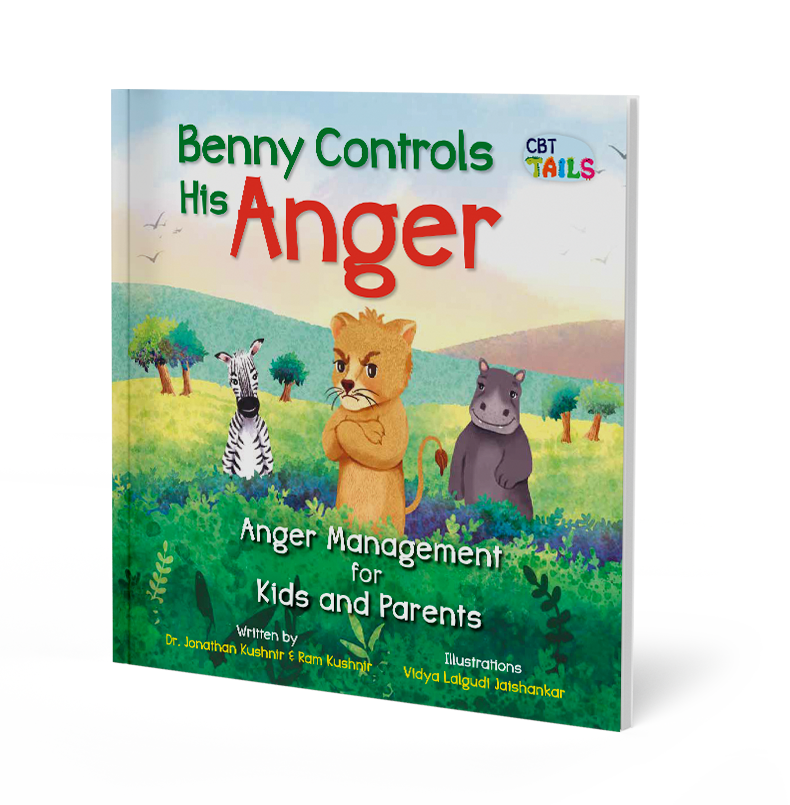
This book describes the journey of Benny, a lion cub, toward controlling his anger, and it outlines the strategies his parents used to help him. The road is not easy, and Benny has to overcome one challenge after another. By the end he can identify an outburst as it starts to develop and stop it in advance, and he can control himself even during an argument with friends or parents. It suits children who learn best through a story and parents who want to see the strategies in action. See Benny Controls His Anger. Buy on Amazon.
The Kids’ Anger Lab

This is a practical guide, not a storybook. It offers a clear explanation of the anger response in children and a four-step plan rooted in CBT principles, with illustrations, relatable examples, sample scripts for starting difficult conversations, and practical strategies for the whole family. It is designed for parents, caregivers, and children to use together. Choose it if you want a structured plan to follow. See The Kids’ Anger Lab. Buy on Amazon.
The two books can be combined. The story introduces the idea that anger can be managed, and the guide gives the family a plan to work through.
How to use a book like this
- Read when everyone is calm. A book about anger should never feel like a punishment that follows an outburst.
- Start with the character. Ask what made Benny angry, what his body felt like, and what helped him. Then ask your child about their own experience.
- Pick one skill and rehearse it. Practice it together at relaxed moments, even as a game, so it is available when feelings run high.
- Agree on a reminder. A private word or signal can prompt your child to use the skill without a lecture.
- Praise the attempt. Notice every time your child tries to calm down, even if it only partly works, and show the same skills yourself.
When to seek professional help
Talk to your pediatrician or a child psychologist if outbursts are very frequent or intense, involve hurting people or breaking things, cause trouble at school or with friends, or continue despite consistent efforts at home. Anger sometimes appears alongside other difficulties, such as anxiety or attention problems, and a professional can assess what is driving it. Dr. Kushnir’s books are educational and are not a replacement for professional assessment or treatment.
Read more about Dr. Kushnir and his online clinics.
Frequently asked questions
Is it normal for a child to have angry outbursts?
Yes. Anger is a normal emotion, and young children are still learning to manage strong feelings, so occasional outbursts are expected. It deserves more attention when outbursts are very frequent, intense, or harmful, or when they cause problems at school or with friends.
How do I teach my child to calm down when angry?
Teach calming skills at relaxed moments, not in the middle of an outburst. Help your child notice early body signals such as a hot face or tight fists, practice a simple strategy such as slow breathing or taking a short break, and praise every attempt to use it.
What should I do during my child's outburst?
Stay as calm as you can, keep your words few, and make sure everyone is safe. Hold the limit you set without arguing or giving in, and talk about what happened later, once your child has cooled down.
Can a book help a child with anger?
A story can help a child see anger from the outside, learn words for what they feel, and become willing to try new skills. Books are educational tools that work best with regular practice and consistent responses from parents. They do not replace professional help when anger is severe.
More guides for parents
- Books for Children With Nighttime Fears: A Parent's Guide
- Books About Nightmares and Dreams for Kids
- Books for Children With Separation Anxiety
- Books for Anxious Children: Which One Fits Your Child?
- Books About Sleep for Kids: Bedtime and Why We Sleep
By Dr. Jonathan Kushnir, clinical psychologist. This guide is educational and does not replace professional advice.

0 Comments