
Separation anxiety usually improves when children practice short, planned separations that grow gradually longer, with a brief and predictable goodbye and calm confidence from parents. Benny Learns to Say Goodbye pairs a humorous story for children with a roadmap of CBT-based strategies for parents. Davey Isn’t Afraid of Goodbyes, with a reading age of 4 to 8, suits a child who pleads “Don’t go!” and worries that something bad will happen while a parent is away.
Why goodbyes are hard and what keeps the fear going
Some distress at separation is a normal part of early childhood. Babies and toddlers often protest when a parent leaves, and many children have a few tearful mornings when they start daycare, preschool, or a new school. In most cases the upset fades as the child learns that parents leave and reliably come back.
Separation anxiety becomes a problem when the fear is stronger than expected for the child’s age, persists, and gets in the way of daily life. A child may refuse to go to school, be unable to stay with a babysitter or a grandparent, follow a parent from room to room, struggle to fall asleep alone, or worry constantly that something bad will happen to a parent or to themselves while they are apart.
From a cognitive behavioral therapy (CBT) point of view, the fear is kept going by avoidance and accommodation. Every time a separation is cancelled, cut short, or softened, the child feels better right away, and so does the parent. Staying home, picking the child up early, answering the same worried questions many times, drawn-out emotional goodbyes, or slipping away unseen all make sense in the moment. Over time they send the message that being apart really is dangerous and that the child cannot manage it. The fear grows, and the child’s world gets smaller.
What helps is gradual practice. Parents and child build a ladder of separations, starting with ones that are only a little hard, such as a few minutes in another room or a short stay with a familiar adult, and working up step by step. A short, warm goodbye ritual, a clear statement of when the parent will return, keeping that promise, and praise for brave behavior all help. So does a parent’s calm, confident tone, because children take their cues about safety from the adults around them.
Which book fits your child?
Benny Learns to Say Goodbye
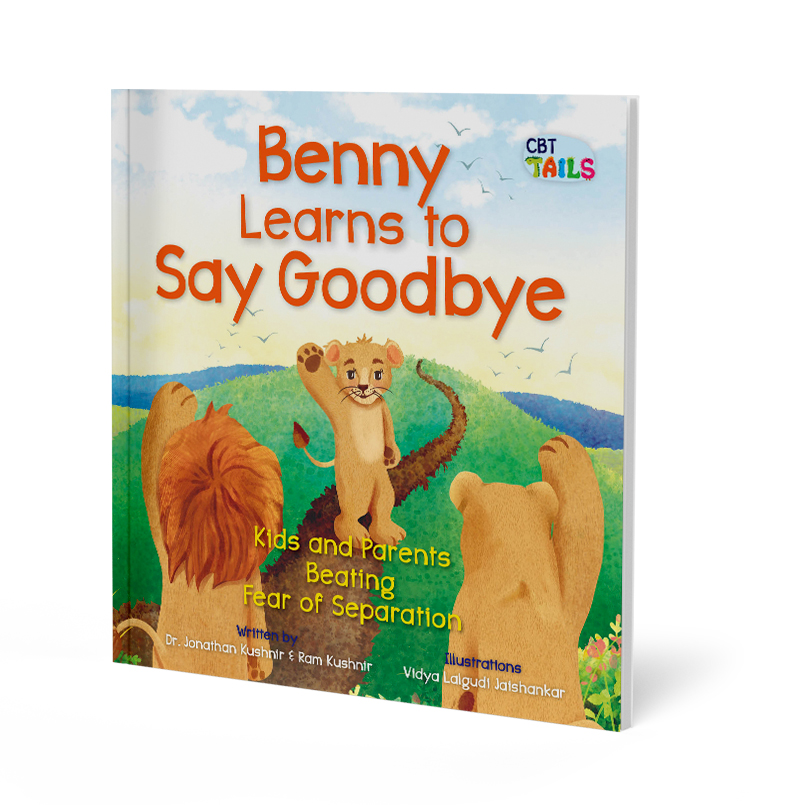
This book offers a roadmap with two tracks. For parents, there are simple strategies based on CBT principles. For children, there is a humorous and intriguing story about how Benny and his parents worked together to beat his fear of separation, one challenge after another. By the end, Benny can say goodbye easily, is more independent, and does many things he used to avoid. It suits families who want the guidance for parents and the story for the child in a single book. See Benny Learns to Say Goodbye. Buy on Amazon.
Davey Isn’t Afraid of Goodbyes

“Mom, don’t go! I’m scared when you’re not here.” “What if something bad happens while you’re away?” “When will you be back?” These are things Davey used to say before he and his parents learned how to say goodbye. Told with humor, the story carries the message that children can beat separation anxiety and learn to be away from their parents, and it outlines simple CBT strategies. The stated reading age is 4 to 8. See Davey Isn’t Afraid of Goodbyes. Buy on Amazon.
Both books follow the same CBT approach, so the choice can come down to which character and which worries feel closest to your child’s own.
How to use a book like this
- Read at a calm time. A quiet afternoon at home works better than the doorway on a difficult morning.
- Name the fear together. Ask which of Benny’s or Davey’s worries sound like your child’s own.
- Turn the story into a plan. Choose a first small separation to practice, and repeat it until it feels easy before moving to the next step.
- Keep goodbyes short and the same every time. A hug, a set phrase, and then go. Avoid sneaking out, which makes children more watchful.
- Share the plan. Let teachers, grandparents, and babysitters know what you are practicing so that everyone responds in the same way.
When to seek professional help
Speak with your pediatrician or a child psychologist if the fear leads to ongoing school refusal, panic, or frequent physical complaints such as stomachaches before separations, or if it has lasted several weeks without improvement. A professional can assess the difficulty and guide a plan that fits your child. Dr. Kushnir’s books are educational and are not a replacement for professional assessment or treatment.
Read more about Dr. Kushnir and his online clinics.
Frequently asked questions
Is separation anxiety normal in children?
Yes. Some distress when a parent leaves is a normal part of early childhood, and many children are upset for a while when they start daycare or school. It becomes a concern when the fear is strong for the child's age, persists, and interferes with school, sleep, or family life.
How can I help my child with separation anxiety at school drop-off?
Keep the goodbye short, warm, and the same every day, tell your child when you will be back, and then leave with confidence. Practice shorter separations at other times so your child builds experience of coping. Working with the teacher on a consistent plan also helps.
Should I sneak out when my child is not looking?
No. Slipping away may avoid tears in the moment, but it usually makes children more watchful and more anxious the next time. A brief, honest goodbye builds trust that parents leave and come back.
How long does separation anxiety last?
It varies from child to child. Many children settle as a new setting becomes familiar, especially with consistent, gradual practice. If the fear has continued for several weeks and affects daily life, it is worth asking a professional for advice.
More guides for parents
- Books for Children With Nighttime Fears: A Parent's Guide
- Books About Nightmares and Dreams for Kids
- Anger Management Books for Kids and Parents
- Books for Anxious Children: Which One Fits Your Child?
- Books About Sleep for Kids: Bedtime and Why We Sleep
By Dr. Jonathan Kushnir, clinical psychologist. This guide is educational and does not replace professional advice.



0 Comments