
Watch: why trying harder to sleep backfires
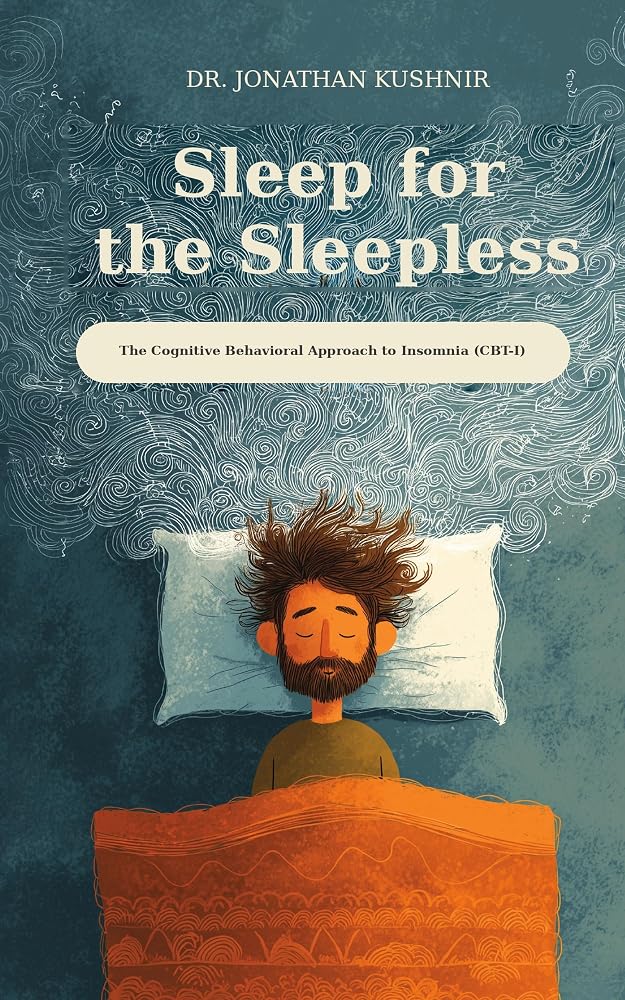
Sleep for the Sleepless: The Cognitive Behavioral Approach to Insomnia (CBT-I)
Book description
Stop fighting for sleep — and start letting it come back on its own.
If you’ve spent nights staring at the ceiling, watching the clock, dreading the next day before it even starts — you already know that trying harder to sleep almost always backfires.
In this clear, compassionate, and clinically grounded guide, Dr. Jonathan Kushnir draws on years of experience treating insomnia to explain exactly why sleep breaks down, and how to rebuild it using CBT-I (Cognitive Behavioral Therapy for Insomnia) — the gold-standard, evidence-based treatment recommended over sleeping pills by sleep specialists worldwide.
Inside, you’ll learn:
- How sleep actually works — sleep drive, the circadian clock, and why you can’t force yourself to fall asleep
- Why insomnia becomes a vicious cycle, and how a single bad night turns into a chronic problem
- The hidden “safety behaviors” that feel helpful but quietly keep you awake
- The core CBT-I tools that work: stimulus control, sleep restriction, and calming a racing mind at night
- How insomnia intersects with anxiety, depression, PTSD, ADHD, menopause, and aging — and what to do about it
- Real, honest stories from real patients (names changed) showing what recovery actually looks like, setbacks included
Written in a warm, non-clinical voice and grounded in the same techniques used in sleep clinics, Sleep for the Sleepless is both a self-help program and an honest explanation of what sleep is, why it goes wrong, and how to trust it again — without pills, and without a fight.
Recommendation
“An essential, encouraging, and practical book — one that offers its readers not only sound theoretical and clinical knowledge, but also hope and tools they can actually put to use.”
Prof. Doron Gothelf, Head of the Division of Psychiatry, Tel Aviv University
“The information contained in this book is provided for educational purposes only. It is not meant to replace professional advice, diagnosis, or treatment. Any attempt to diagnose and treat a medical condition should be done under the direction of a healthcare provider or physician. For any medical conditions, each individual is recommended to consult with a healthcare provider before using any information or ideas discussed. The author shall not be liable or responsible for any loss or adverse effects allegedly arising from any information or suggestion in this book.”
Who is this book for?
- You lie awake for a long time before falling asleep, or wake in the night and cannot get back to sleep
- You watch the clock and dread the next day before it starts
- The harder you try to sleep, the more awake you feel
- You want to understand CBT-I and follow a structured self-help program for insomnia
What’s inside
- How sleep works: sleep drive, the circadian clock, and why you cannot force yourself to fall asleep
- Why insomnia becomes a vicious cycle, and the 'safety behaviors' that feel helpful but keep you awake
- The core CBT-I tools: stimulus control, sleep restriction, and calming a racing mind at night
- How insomnia intersects with anxiety, depression, PTSD, ADHD, menopause, and aging
- Stories from real patients, with names changed, including their setbacks
How to use this book
Read the book in order, since the explanation of how sleep works is the basis for the tools that follow. Apply the CBT-I tools consistently for several weeks, do not judge them by one or two nights, and expect some setbacks along the way. If you have a medical or mental health condition, talk with your clinician before starting.
Book details
- Author: Dr. Jonathan Kushnir
- Pages: 135
- Published: July 2026
- Language: English
Frequently asked questions
Who is Sleep for the Sleepless for?
It is for adults with insomnia. Unlike the children's picture books on this site, it is a 135-page self-help guide for adult readers, written in a warm, non-clinical voice.
What is CBT-I?
CBT-I stands for Cognitive Behavioral Therapy for Insomnia. It is a structured, evidence-based approach that changes the habits and thoughts that keep insomnia going, using tools such as stimulus control and sleep restriction. It is widely recommended by sleep specialists as a first-line treatment for chronic insomnia.
Can I do CBT-I on my own with a book?
Many adults with insomnia can benefit from a self-help CBT-I program, and this book is written as one. It takes consistent practice over several weeks. A book is educational and does not replace assessment or treatment by a professional, especially if you have other health conditions.
When a book is not enough
If insomnia has lasted for months, seriously affects your mood, work, or safety, or comes with loud snoring, pauses in breathing, or symptoms of depression or anxiety, see your doctor or a sleep specialist. Dr. Kushnir also works with families online: online insomnia treatment (CBT-I).
Related guide: Books about sleep for kids